Cour des Voraces
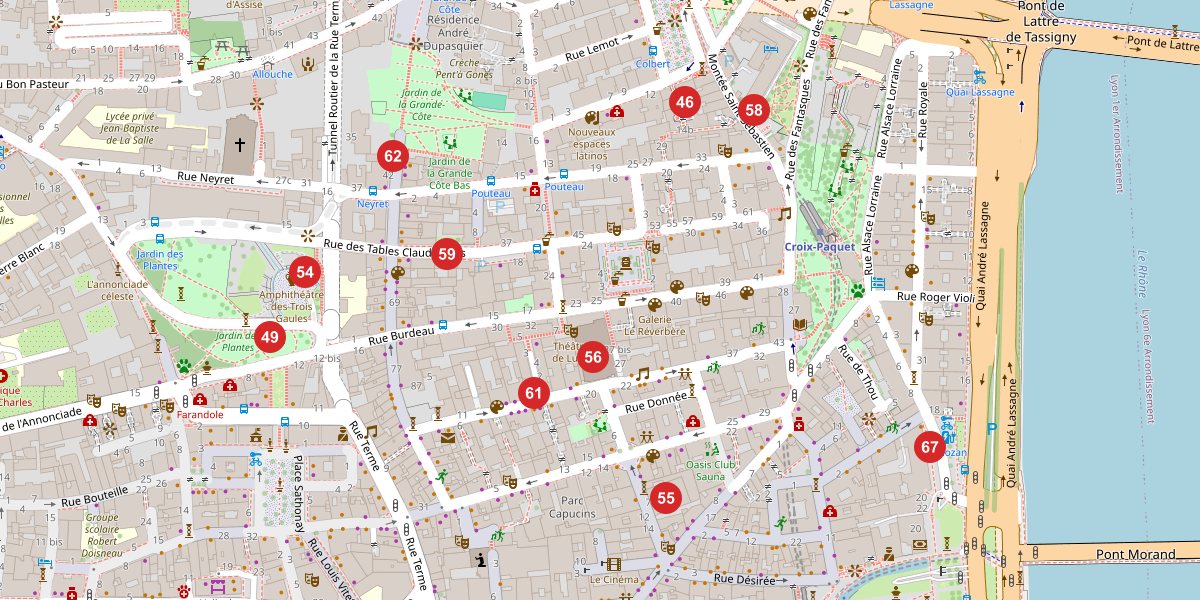
Bel exemple d’une architecture populaire, vers 1830-1840, cet immeuble est lié, dans l’imaginaire d’aujourd’hui, au souvenir des émeutes des ouvriers en soie, ou « canuts », du XIXe siècle. Il passe pour avoir abrité l’état-major de la « société des Voraces » qui, lors de la révolution de 1848, répandit dans toute la ville son rêve généreux d’un ordre social nouveau et juste. La cour, avec son escalier monumental, est le point de départ d’un circuit des « traboules » (petits couloirs traversant un ou plusieurs immeubles) sur les pentes de la Croix-Rousse.
The Voraces courtyard
A fine example of popular architecture, dating from around 1830-1840, this building evokes the memory of the revolts of the silk workers or “canuts” in the 19th century. It is said to have housed the headquarters of the “Voraces” society which, during the 1848 revolts, spread its dream for a new and fair social order throughout the city. The courtyard, with its monumental staircase, is the starting point for a tour of the “traboules” (small covered passageways which wend their way through one or more buildings) on the slopes of Croix-Rousse hill.
 Ville de Lyon
- Nom :
- Cour des Voraces
- Adresse :
- 9 Place Colbert, 69001 Lyon
- Coordonnées :
- 45.772000, 4.834739